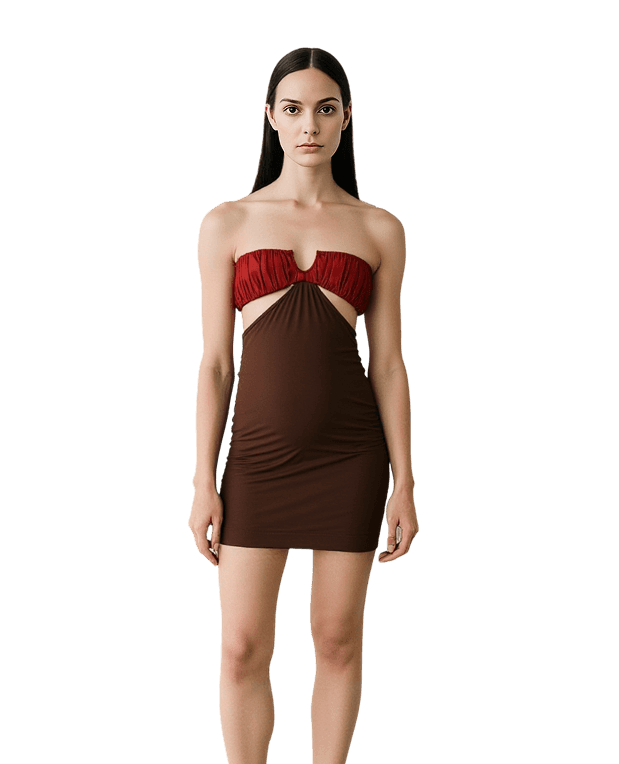
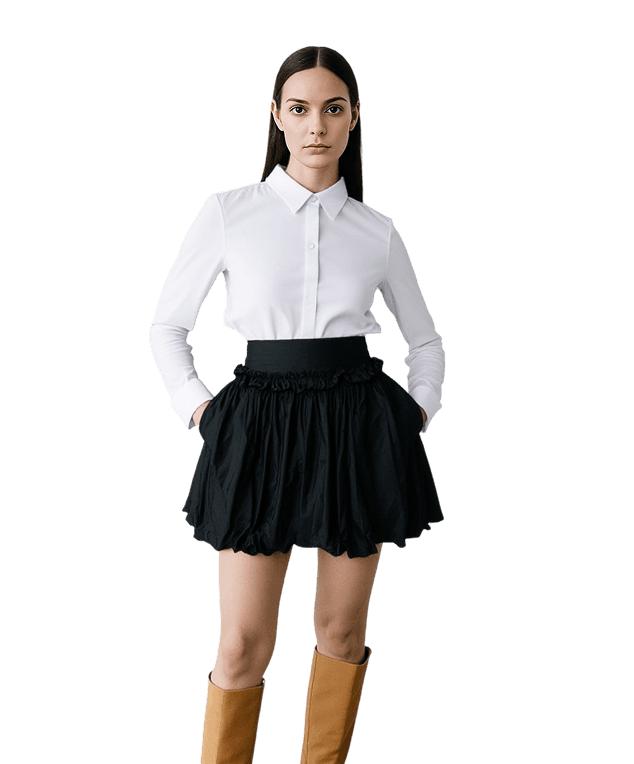
From higher conversion rates to stronger customer retention, AI-powered Virtual Try-On is reshaping fashion e-commerce. Here are 25 statistics every fashion brand should know in 2026.
Online fashion shopping has always faced one fundamental challenge: shoppers can't experience products before purchasing. This uncertainty affects every stage of the customer journey from product discovery to conversion, returns, and customer loyalty.
AI-powered Virtual Try-On is changing that.
According to the DRESSX Intelligence Report, based on data from 1.2 million luxury fashion shoppers across 216 countries and 83 languages, Virtual Try-On is no longer an experimental technology, but rather an essential part of modern fashion e-commerce.
If you're new to the technology, we recommend reading Virtual Try-On for Fashion Brands: How DRESSX Moves Customers from Product Page to Purchase, where we explore why AI-powered Try-On has become one of the most impactful innovations in online retail.
Whether you're evaluating AI Virtual Try-On for your brand or simply tracking the future of fashion e-commerce, these are the statistics worth knowing.
Virtual Try-On Market Statistics
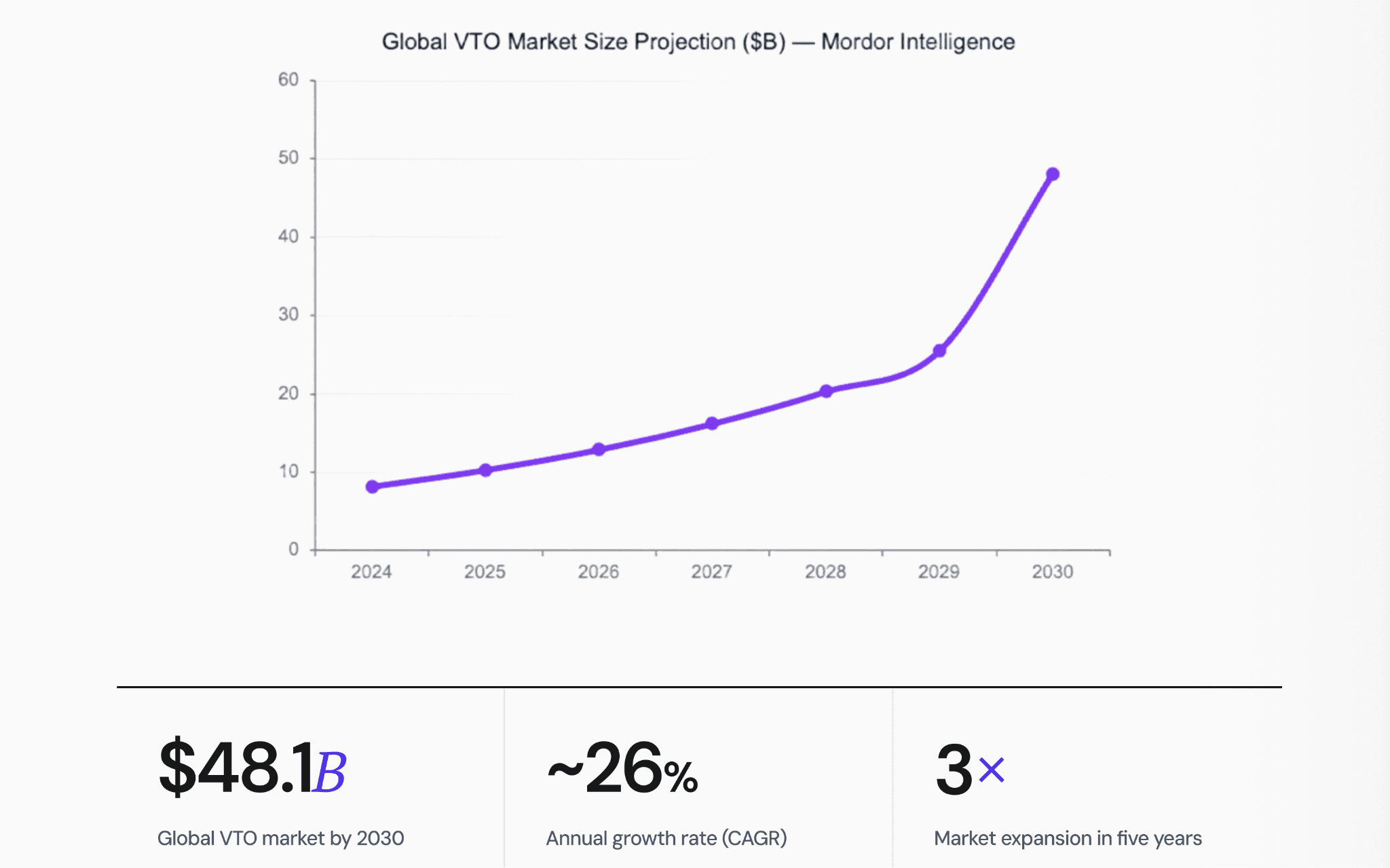
1. The global Virtual Try-On market is growing rapidly.
The global virtual try-on market is expected to reach $48.1 billion by 2030 growing at nearly 26% annually as the technology becomes more accessible, more precise, and more expected by consumers across fashion, footwear, beauty, and accessories.
2. Fashion remains one of the hardest categories to sell online.
The average fashion e-commerce conversion rate is around 1-2%, while physical retail conversion is often closer to 23%-30%. That means online fashion conversion can be roughly 15x lower than in-store conversion. Unlike physical retail, online shoppers cannot touch fabrics, evaluate fit, or imagine themselves wearing products with confidence.
3. Confidence is one of the biggest barriers to online fashion purchases.
Many shoppers don't question whether they like a product – they question whether it's right for them. Fashion shoppers also face another challenge: too much choice. According to research cited by McKinsey, 73% of shoppers feel overwhelmed by the number of products available online. More options do not always lead to more purchases. In many cases, too much choice creates hesitation, slows decision-making, and leads shoppers to abandon their carts.
Virtual Try-On Conversion Statistics
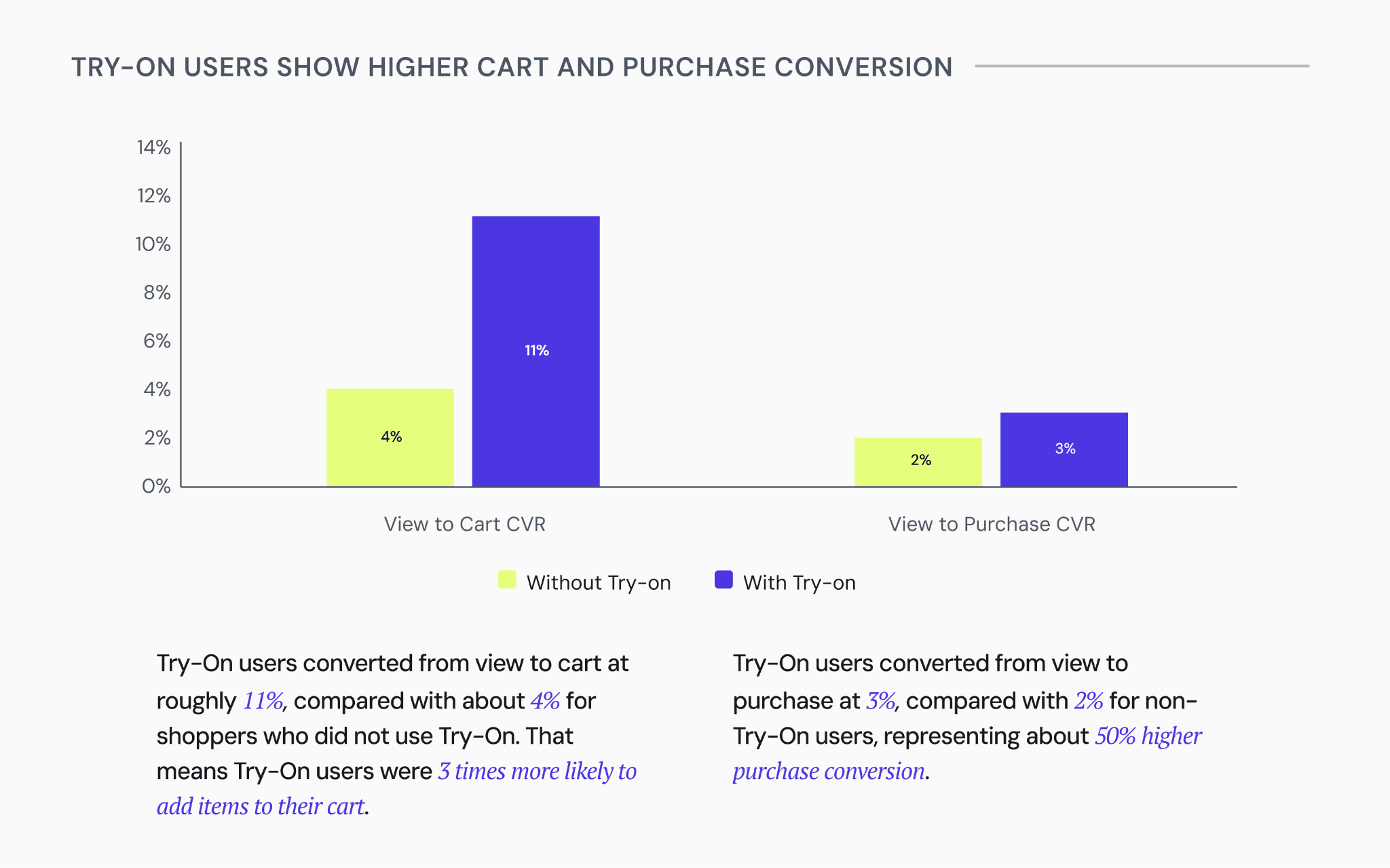
4. Virtual Try-On users convert 50% more often than shoppers who never use Try-On.
One of the strongest findings from the DRESSX Intelligence Report is the direct relationship between Virtual Try-On engagement and purchase conversion.
5. Try-On users are nearly 3× more likely to add products to their shopping cart.
Removing uncertainty encourages customers to continue through the purchase journey.
6. View-to-cart conversion increased from 4% to 11% among Try-On users.
This represents one of the clearest indicators that Virtual Try-On drives stronger purchase intent.
7. View-to-purchase conversion increased from 2% to 3%.
While this may appear modest, it represents approximately 50% higher purchase conversion.
8. The highest-performing brands saw conversion increases of up to 10×.
The impact varies by implementation, product category, and customer experience, but the upside can be substantial.
Customer Engagement Statistics
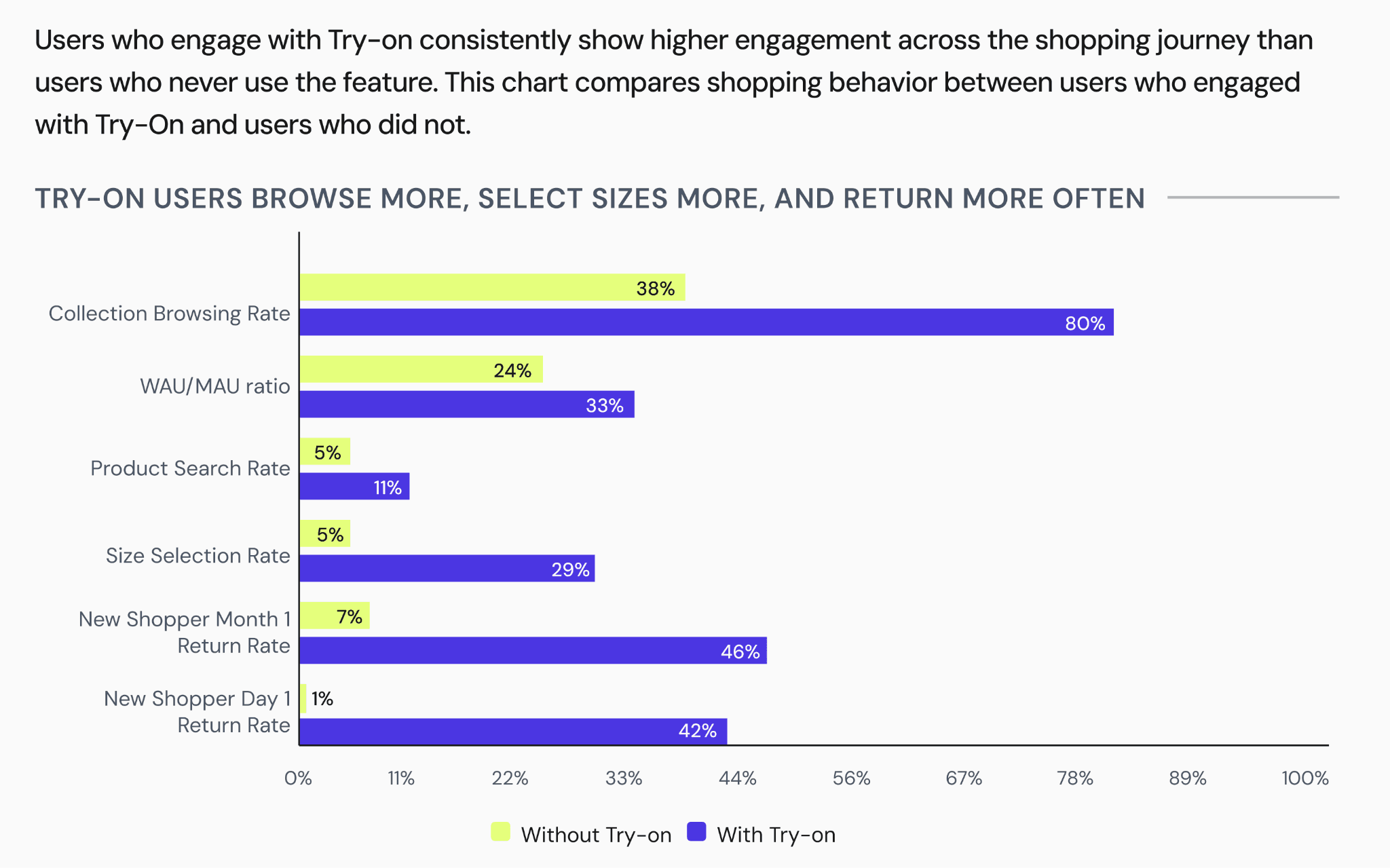
9. Virtual Try-On users viewed 7× more product listings than shoppers who never used Try-On.
Rather than replacing browsing, AI encourages deeper exploration.
10. Customers engaged with more products before making purchasing decisions.
This creates opportunities for cross-selling, styling inspiration, and increased basket size.
11. AI-powered shopping experiences encourage discovery rather than passive browsing.
Customers become active participants in building outfits instead of simply scrolling through catalog pages.
Customer Retention Statistics
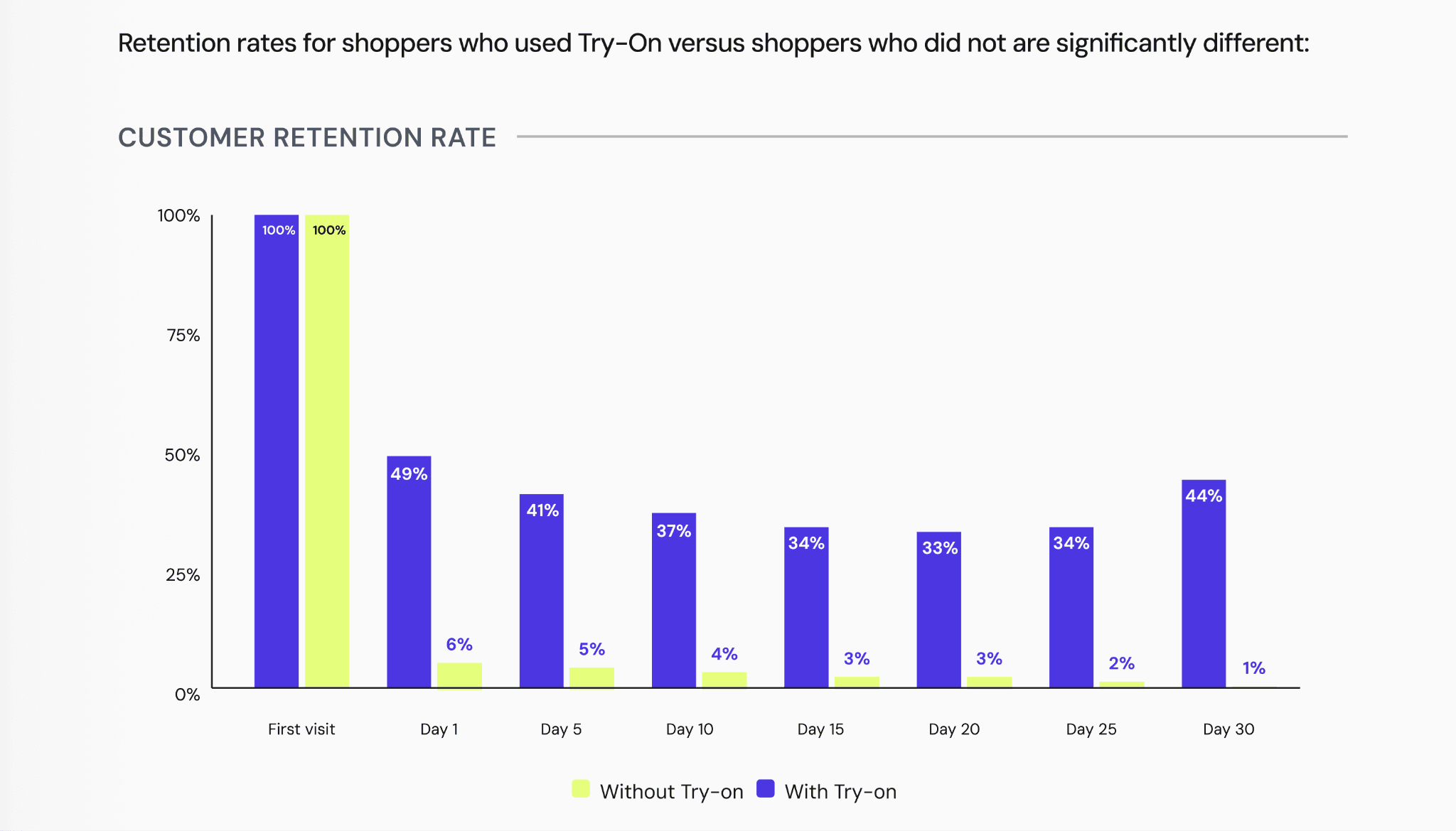
12. Day-30 retention reached 44% among Virtual Try-On users.
13. Non-Try-On users showed just 1% Day-30 retention.
The difference suggests that AI-powered shopping experiences create stronger long-term engagement.
14. Returning shoppers generated significantly higher lifetime value opportunities.
Keeping customers engaged after their first purchase remains one of fashion e-commerce's biggest challenges.
Consumer Behavior Statistics
15. The report analyzed 1.2 million luxury fashion shoppers.
16. The research spans 216 countries.
17. Shopper activity covered 83 languages.
This makes it one of the largest publicly available datasets examining AI-powered Virtual Try-On behavior in luxury fashion.
18. Luxury shoppers increasingly expect personalized shopping experiences.
Static product photography alone is no longer enough to support confident purchase decisions.
AI Virtual Try-On Technology Statistics
19. Modern AI Virtual Try-On is far more than image generation.
The best solutions preserve garment structure, textures, silhouettes, and fabric behavior while adapting products to different body types.
Not every AI Try-On solution delivers the same level of realism. In Virtual Try-On in 2026: Why Most Solutions Fall Short (and What Fashion Brands Actually Need), we break down the technical capabilities fashion brands should evaluate when selecting a solution.
20. Fashion-specific AI outperforms general-purpose image generators for commerce.
Purpose-built fashion AI prioritizes garment fidelity, realistic fabric behavior, and accurate fit visualization, capabilities that general-purpose image generators were never designed to deliver.
Learn more about DRESSX Virtual Try-On
Fashion E-Commerce Statistics
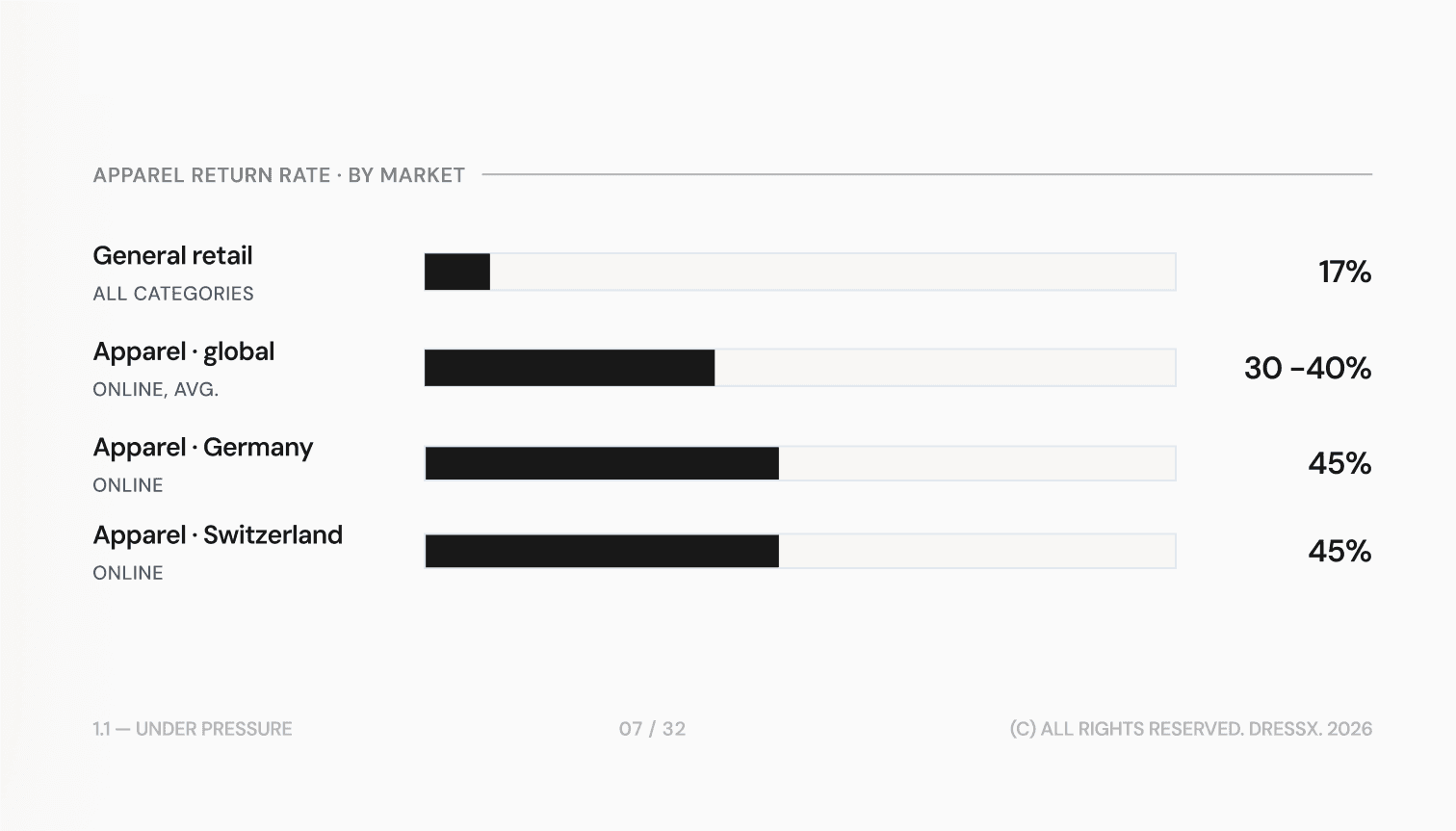
21. Fashion experiences some of the highest online return rates across retail categories.
Reducing purchase uncertainty has become a strategic priority for brands.
22. Customer acquisition costs continue to rise.
Improving on-site conversion has become just as important as attracting new visitors.
23. Personalization is becoming a competitive advantage.
Shoppers increasingly expect experiences tailored to their preferences, body type, and personal style.
Retail Innovation Statistics
24. AI-powered shopping is expanding beyond e-commerce.
Technologies like the DRESSX AI Mirror are bringing Virtual Try-On into physical retail, pop-up activations, and brand experiences – bridging online personalization with in-store engagement.
Learn more about DRESSX Mirror
25. AI Virtual Try-On is becoming part of a broader AI commerce ecosystem.
Leading fashion brands are increasingly combining Virtual Try-On with AI-powered styling, AI customer assistants, AI-generated product content, and personalized marketing to create connected shopping journeys.
Why These Virtual Try-On Statistics Matter
The data tells a much bigger story than higher conversion rates. Fashion e-commerce has always struggled to recreate the confidence shoppers feel in physical stores.
AI-powered Virtual Try-On helps bridge that gap by transforming online shopping from imagination into experience.
Instead of asking shoppers to picture themselves wearing a product, brands can now let them see it. The result is greater confidence, stronger engagement, higher conversion, and more meaningful customer relationships.
If you're evaluating AI-powered shopping experiences for your brand, What Makes DRESSX One of the Best AI Virtual Try-On Solutions for Fashion E-Commerce? explores the technologies and capabilities behind today's leading Virtual Try-On solutions.
Want to explore the complete research?
The DRESSX Intelligence Report analyzes behavior across 1.2 million luxury fashion shoppers, uncovering how AI-powered Virtual Try-On is changing conversion, engagement, retention, and product discovery.
Frequently Asked Questions
What is AI Virtual Try-On?
AI Virtual Try-On allows shoppers to see how clothing appears on their own body before purchasing, using artificial intelligence to generate realistic visualizations.
Does AI Virtual Try-On increase conversion?
Yes. According to the DRESSX Intelligence Report, shoppers who engaged with Virtual Try-On converted 50% more often than those who did not.
Why is AI Virtual Try-On important for fashion brands?
It helps reduce purchase uncertainty, improve customer confidence, increase engagement, and support higher conversion rates.
How accurate is DRESSX Virtual Try-On?
DRESSX Virtual Try-On provides up to 95-99% accuracy when garment measurements are available. This is done through precision silhouette mapping, dynamic fabric physics, and generative realism to preserve garment structure, fabric behavior, and design details.