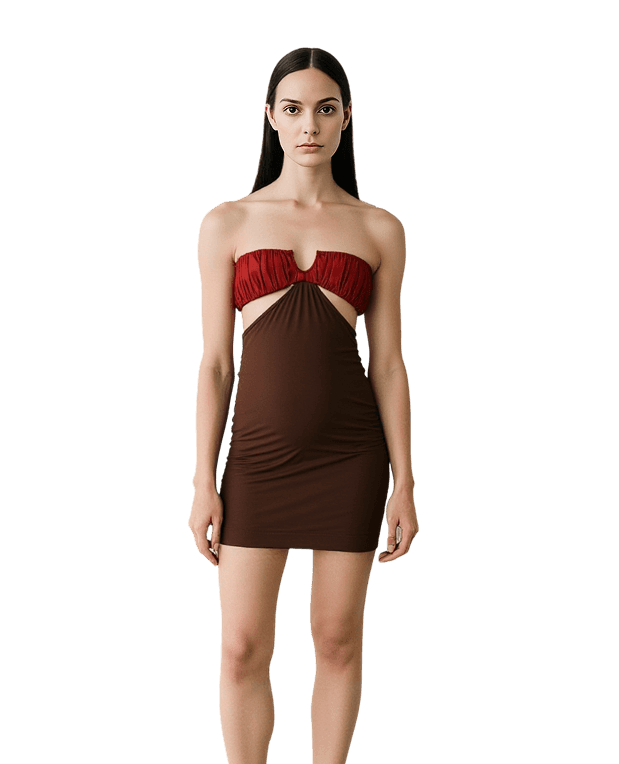
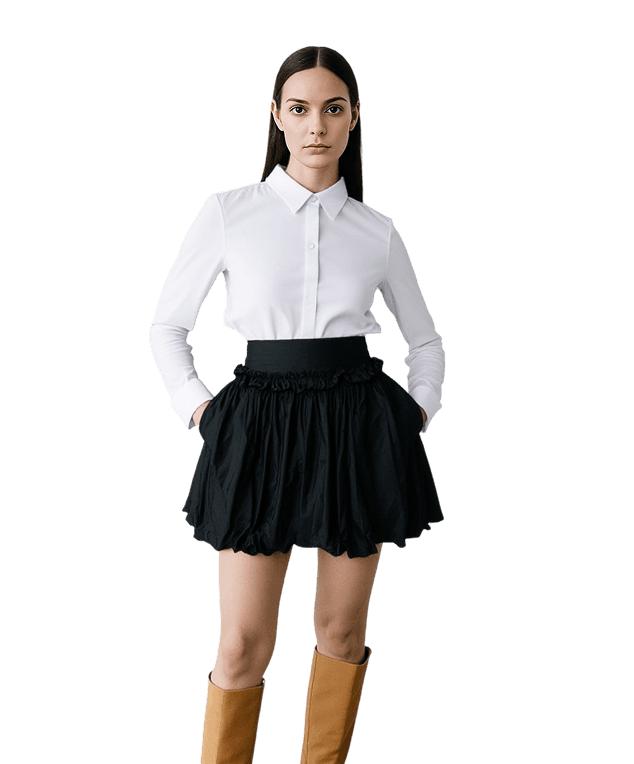
A virtual try-on demo almost always looks impressive. The real question is whether that same technology performs once it is running across a full catalog, on real shoppers, at production scale.
That gap between demo and deployment is where most evaluation processes fall short.
Why Do So Many Virtual Try-On Pilots Underperform After Launch?
Virtual try-on pilots underperform after launch because a polished demo on a handful of curated SKUs does not predict how a model handles a full seasonal catalog with variable lighting, body types, and garment complexity.
The vendor landscape is also expanding fast, which makes evaluation criteria more important, not less. The global AI-in-fashion market was valued at $2.46 billion in 2025 and is projected to reach $72.56 billion by 2035, according to SNS Insider, growing at a 40.3% annual rate.
That growth is pulling in generalist technology providers alongside fashion-specific ones, and the two categories are not interchangeable. A model trained broadly across product categories optimizes for different things than one trained specifically on how fabric drapes, stretches, and moves.
What Should Fashion Brands Actually Compare When Evaluating Try-On Vendors?
Fashion brands should compare rendering accuracy, deployment flexibility, proven performance data, and catalog scalability, rather than relying on a single demo impression.
Rendering accuracy covers how well the technology captures drape, movement, and material behavior specific to fashion, beyond a generic body overlay. Deployment flexibility means confirming whether the vendor supports an API, a white-label build, or a Shopify app install, and which fits your current stack.
Proven performance data means asking for return rate and conversion results, beyond engagement metrics like time on page. Catalog scalability means understanding how the technology performs across thousands of SKUs, beyond the curated set used in a sales demo.
Why Rendering Accuracy Matters More Than a Flashy Demo
Rendering accuracy matters because shoppers can tell the difference between an approximation and a true representation, especially in categories where fit and finish justify the price.
Natalia Modenova, COO and Founder of DRESSX, has described what that distinction requires in practice.
"Our video-based training layer allows us to capture how garments behave in motion, not just how they look in a static image," Modenova said. "That means how a jacket sits on the shoulders, how fabric falls when someone moves, or how a silhouette holds its shape."
"A precision that elevates digital try-on from approximation to true representation, a standard essential for luxury," she added.
That level of fidelity does not show up in a 30-second demo. It shows up in whether shoppers trust what they see enough to complete a purchase.
What Data Should a Vendor Be Able to Show You?
A credible vendor should be able to show category-specific return and conversion data, beyond aggregate platform-wide claims. Ask for numbers broken out by product type, price point, or catalog size similar to yours.
Brands using DRESSX Virtual Try-On see a 40% reduction in return rates and a 3.2x lift in conversion. A separate study of more than 1.2 million shoppers found virtual try-on users were 50% more likely to purchase and viewed 7 times as many products before deciding.
DRESSX has also published its full breakdown of virtual try-on statistics for brands that want the complete data set before a vendor conversation.
The distinction between fashion-specific and general-purpose try-on technology goes beyond a single vendor's talking point.
Forbes covered this convergence directly, positioning fashion-specific providers as a distinct layer above general-purpose visualization tools built for broader retail.
A Practical Evaluation Checklist
A short checklist can separate a vendor that performs at scale from one that only performs in a sales demo.
Request a demo on your own SKUs. Generic sample assets hide how a model handles your specific fabrics, silhouettes, and price points.
Ask for return and conversion case data, broken out by category. Aggregate platform averages hide whether results hold up for a catalog like yours.
Confirm the deployment timeline for your specific platform. A Shopify app install and a custom white-label build carry very different timelines.
Review data privacy and handling policies. Confirm where shopper images and body data are stored and how long they are retained.
Run your own numbers before committing. A virtual try-on ROI calculator turns vendor claims into a projection based on your own traffic and revenue.
Choose the Platform Built Specifically for Fashion
The AI-in-fashion market is growing fast enough that evaluation discipline matters more each year, not less. A demo tells you what a vendor can show. Rendering accuracy, deployment fit, and proven category data tell you what it can actually deliver.
DRESSX Virtual Try-On was built specifically for fashion and luxury brands, where drape, material behavior, and brand fidelity determine whether a shopper trusts what they see.