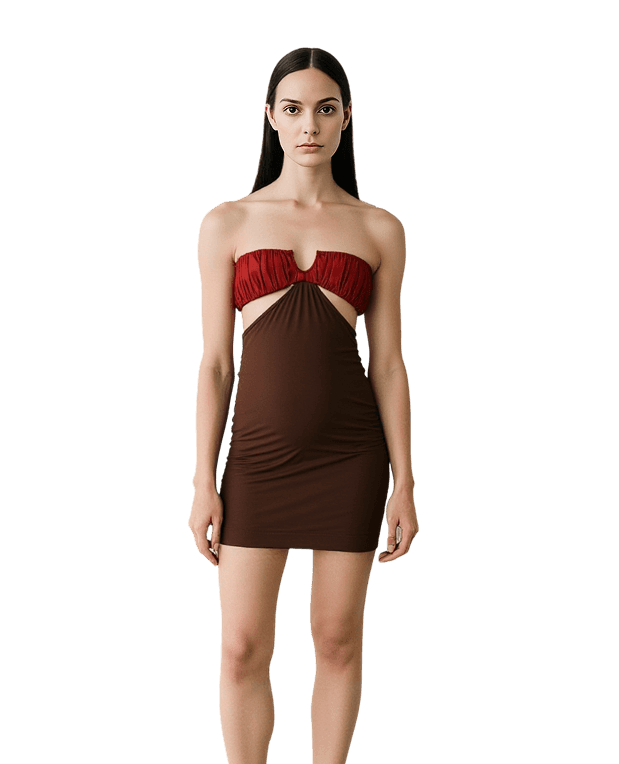
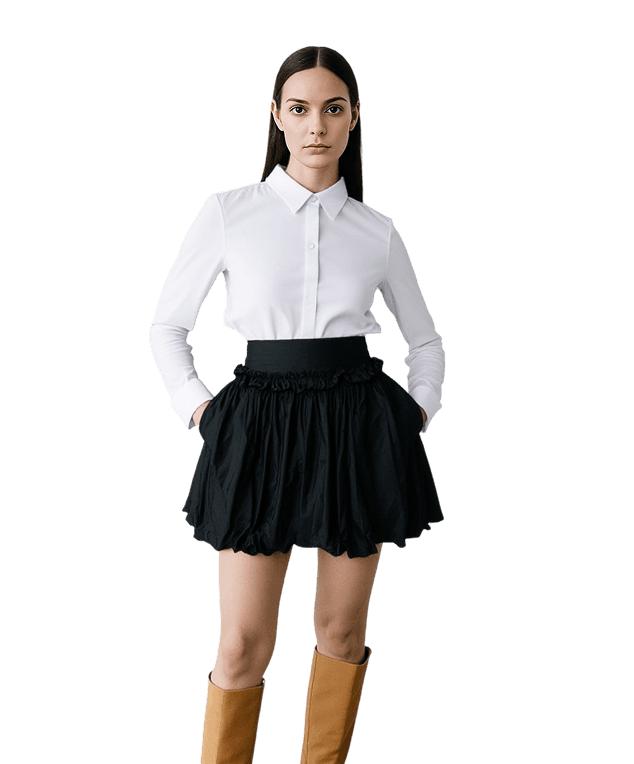
AI virtual try-on is technology that uses computer vision and generative AI to show a shopper how a garment will look on their own body from a photo.
It exists to solve one specific problem: 65% of online shoppers say they have returned an item because it did not fit, more than any other reason, according to a DealNews survey. Virtual try-on gives a shopper that answer before checkout, not after a box arrives.
How Does AI Virtual Try-On Actually Work?
AI virtual try-on works by training a model on how real garments behave, then mapping that behavior onto a shopper's own photo or a personalized AI-generated avatar. The model accounts for drape, texture, and how fabric moves against a specific body shape.
That is a fundamentally different task than swapping a shirt color in a static image. A technical fabric like compression knit or a fluid silk slip needs to render differently, and a system built for one does not automatically handle the other.
This technology sits inside a fast-growing category. The global AI-in-fashion market was valued at $2.46 billion in 2025 and is projected to reach $72.56 billion by 2035, growing at a 40.3% annual rate, according to market research firm SNS Insider.
What Types of Virtual Try-On Solutions Exist?
Virtual try-on solutions generally fall into two categories: general-purpose visualization features built into broad platforms, and fashion-specific rendering engines built for drape and material accuracy.
Google added generative AI virtual try-on to Search in 2023, letting shoppers see how tops look on a range of real models. Google's own research found 42% of online shoppers do not feel represented by standard model imagery, and 59% have felt dissatisfied with an item because it looked different on them than expected.
Forbes covered the distinction between these two approaches directly, naming fashion-specific providers like DRESSX as a distinct layer above general-purpose visualization tools.
That specialist approach is what DRESSX Virtual Try-On is built around. Brands using it see a 40% lift in conversion rate and a 30% reduction in returns, with integration into an existing site or app averaging 24 hours, as part of the broader DRESSX AI Suite.
Who's Actually Using AI Virtual Try-On?
Adoption has moved well past early experimentation. ASOS, a UK-based online fashion retailer, launched a hybrid virtual try-on experience in February 2026 in partnership with AI platform AIUTA, covering roughly 10,000 products for select UK and US shoppers.
Walmart has offered its own version since 2022, when it launched Be Your Own Model, letting shoppers upload a full-body photo to preview more than 270,000 women's clothing items.
DRESSX's use cases skew toward brands where fit and material accuracy carry the highest stakes. British fashion brand Victoria Beckham uses DRESSX for an AI Twin try-on experience across its ecommerce site.
Luxury marketplace Farfetch has partnered with DRESSX Agent to reach a younger, AI-native shopper base, and formalwear retailer Windsor Fashion uses DRESSX's clienteling tools for personalized prom and wedding dressing.
A DRESSX Intelligence study of more than 1.2 million shoppers found virtual try-on users were 50% more likely to purchase and viewed 7 times as many products before deciding, evidence the technology changes shopping behavior, beyond return rates alone.
Frequently Asked Questions
What is AI virtual try-on? AI virtual try-on is technology that uses computer vision and generative AI to show a shopper how a garment will look on their own body or AI-generated avatar, using a photo instead of a physical fitting room.
Does AI virtual try-on actually reduce returns? Yes, when the underlying model is trained on fashion-specific material behavior. Brands using DRESSX Virtual Try-On see a 30% reduction in returns and a 40% lift in conversion rate.
Is virtual try-on only available at large retailers? No. While retailers like ASOS and Walmart have built their own versions, DRESSX Virtual Try-On deploys via API, white-label build, or Shopify app install, so smaller and mid-size brands can add it without rebuilding their stack.
Why This Technology Is No Longer Optional
Virtual try-on has moved from a novelty feature to infrastructure that shoppers expect, and the businesses building it range from search engines to specialist fashion AI providers. The gap between the two is rendering accuracy, and that gap is what determines whether a shopper trusts what they see enough to buy.
DRESSX has published a full breakdown of AI virtual try-on statistics for brands evaluating the category in more depth.