Denim is fashion's most searched category. It's also one of the hardest to sell online.
Shoppers know exactly what they want: the right wash, the right fit, the right finish. But translating that on a product page — with a flat image, a generic size chart, and a model who doesn't look like them — leaves too many questions unanswered. The result is hesitation, over-ordering, and returns.
AI virtual try-on was built to close that gap. But for denim specifically, it's a harder problem than it looks.
What Makes Denim So Difficult to Represent Online
Denim is hard to render accurately because it carries visual depth that most fabrics don't. It's not a flat color. It's a material with grain, texture, dimensional shading, and wear patterns that change how it looks depending on construction, finish, and body movement.
The variety makes it harder still. Denim exists across hundreds of variations: raw selvage and heavily distressed, deep indigo and bleached white, rigid 100% cotton and stretch blends with elastane or Tencel. Each combination creates a distinct visual identity. Each one behaves differently on a body.
The challenge goes beyond color
Standard product photography can capture how denim looks on one model, in one light, at one moment. It cannot show a shopper how that same garment will look on their proportions, or how the wash will read against their complexion, or whether the stretch will move the way they need it to.
That uncertainty is expensive. According to the National Retail Federation, apparel return rates in e-commerce average 30 to 40 percent industry-wide. For denim — where fit is personal and finish is a primary purchase driver — the figure runs higher.
Why most virtual try-on tools fall short on denim
Generic virtual try-on solutions handle simplified materials well. For denim, they typically fall short in three specific areas:
Texture and grain: the twill weave changes in appearance depending on scale and angle. A flat texture overlay misses this entirely.
Fading and finish accuracy: stonewash, distress, raw, and bleached finishes each have a distinct surface quality. Approximating with a tint produces results that look unconvincing.
Drape behavior by fabric type: rigid cottons and stretch blends move differently on a body. A system that treats them the same will render a stretch skinny jean as stiff as a raw jacket.
These aren't cosmetic details. They're the difference between a shopper trusting what they see and clicking away.
How Does Virtual Try-On for Denim Actually Work?
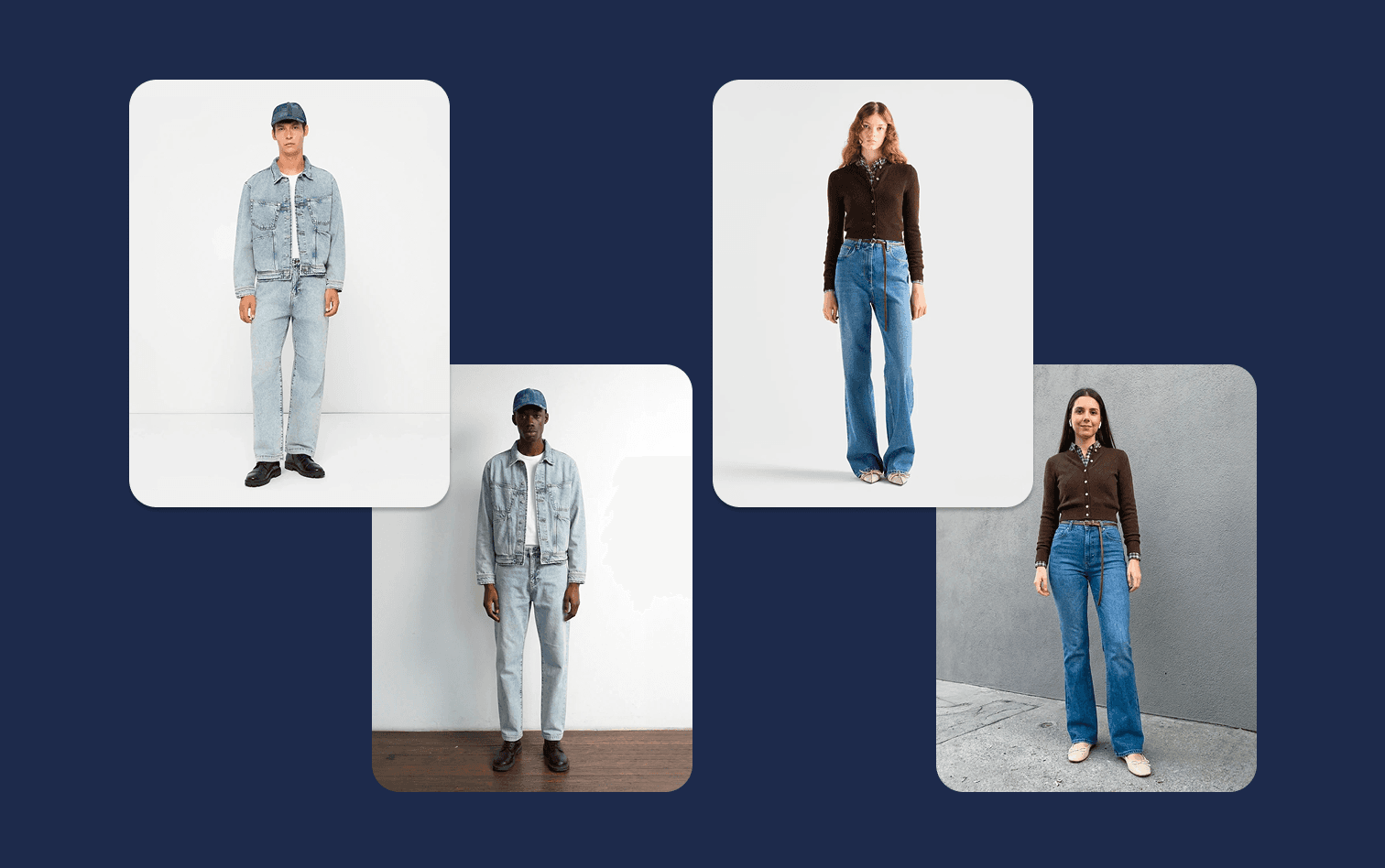
Virtual try-on for denim works by using AI models trained specifically on denim's material properties, rather than applying a general-purpose rendering approach to a specialized fabric.
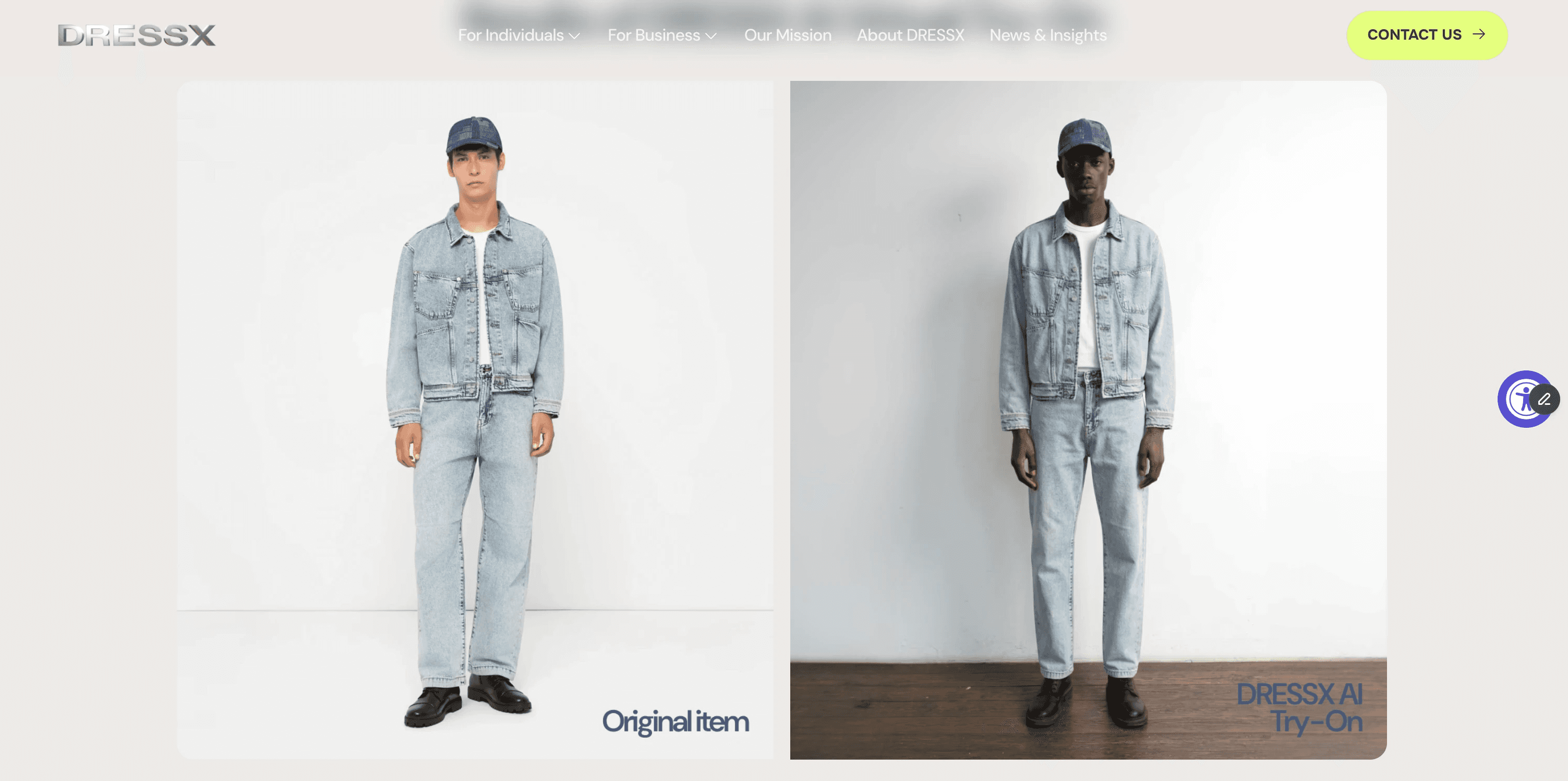
The most accurate implementations render four dimensions simultaneously:
Texture and grain — the twill weave structure at every scale, so the fabric reads as woven material, not a printed surface.
Wash and finish — stonewash, raw, distressed, and bleached finishes each reproduced with their actual visual signature, not approximated.
Drape and fit behavior — rigid cottons and stretch blends modeled distinctly, so each garment moves and sits the way it does in real life.
Fading pattern placement — seam stress points, whiskers, and surface wear appearing where they actually appear on the specific garment.
When all four are present, the render is close enough to the real garment that shoppers can make a genuine decision. That's the point where virtual try-on stops being a novelty and starts being a conversion tool.
For a broader look at how AI is reshaping the online shopping experience, read our article on AI Virtual Try-On Goes Mainstream at Zara and DRESSX Elevates the Standard.
Does Virtual Try-On Reduce Returns for Denim Brands?
Yes — because the main drivers of denim returns are fit uncertainty and finish misrepresentation, both of which virtual try-on for denim addresses directly.
A shopper who can see how a specific wash and cut looks on their own body has a much clearer picture of what they're ordering. The uncertainty that leads to returns drops significantly. Research shows virtual try-on can reduce return rates by 25 to 40 percent, with the strongest impact in categories where fit perception is most subjective.
For denim brands, that means the highest-return styles — skinny and slim fits, high-waisted cuts, heavily finished washes — become lower-risk purchases. The shopper is more confident. The brand absorbs fewer return costs. Both sides benefit.
What this means for conversion
Higher confidence doesn't just reduce returns. It accelerates decisions. Shoppers who can visualize a garment on themselves are significantly more likely to complete a purchase than those working from product images alone. Studies show interactive try-on experiences can lift conversion rates by 20 to 30 percent.
For denim specifically, where purchase hesitation is structurally high, that lift is meaningful.
How DRESSX Solves the Denim Problem
DRESSX Virtual Try-On for Denim is built on dedicated denim datasets and a specialized rendering pipeline trained on denim's full material complexity. It covers more than 100 variations across texture, wash, drape, and fading — rather than adapting a general-purpose system to a fabric that demands something more specific.
The result: shoppers report 75% higher confidence in their purchase decision after using it.
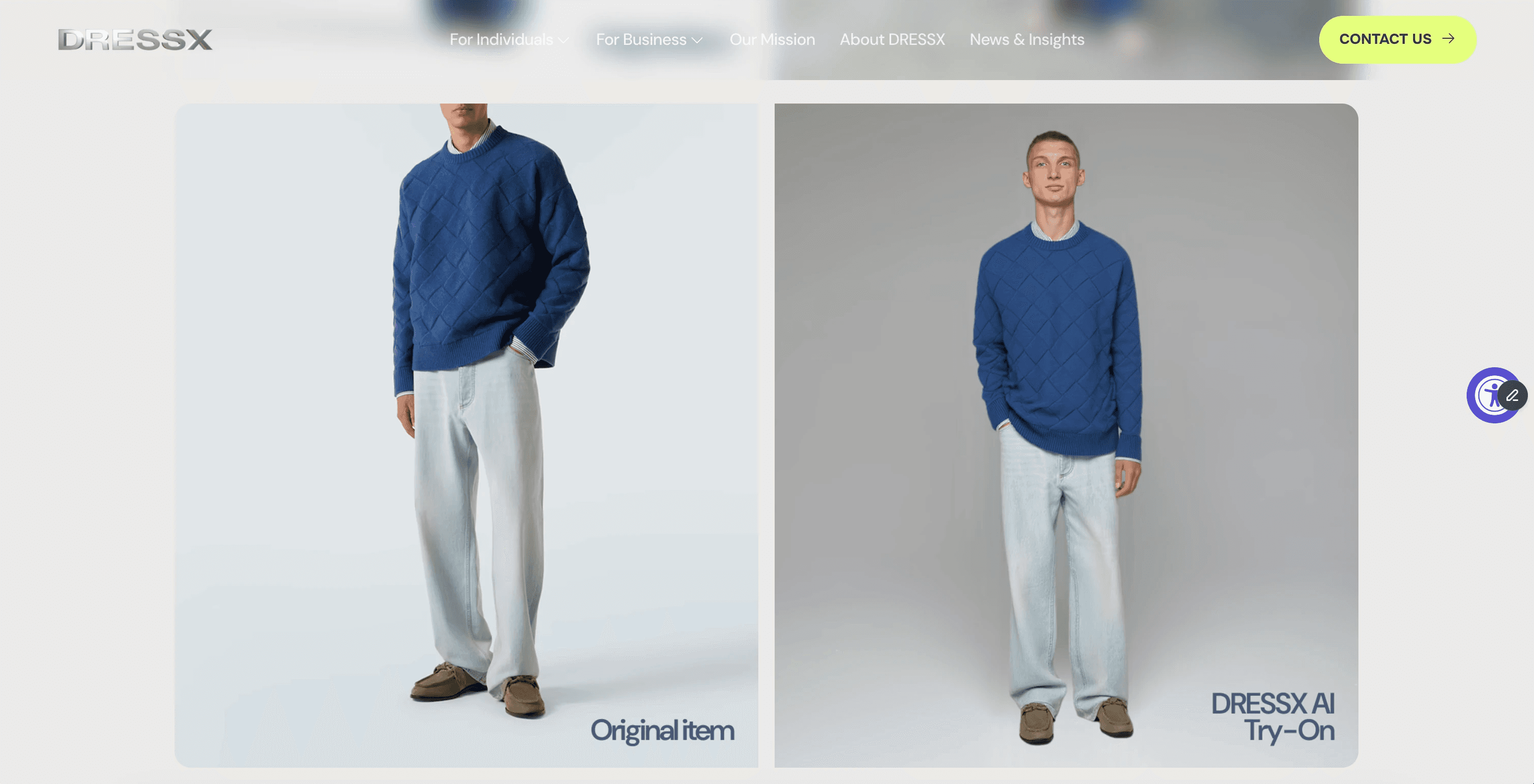
Four rendering capabilities make the difference:
Texture and grain: twill weave structure rendered at every scale.
Wash and finish: stonewash, raw, distressed, bleached — each reproduced faithfully, not approximated.
Drape and fit: rigid cottons and stretch blends behave differently on a body. The DRESSX rendering engine models that distinction.
Fading patterns: seam stress, whiskers, and surface wear placed where they actually appear on the specific garment.
The solution integrates directly into existing e-commerce infrastructure via REST API or a drop-in widget, with native compatibility for Shopify, Magento, and Salesforce Commerce Cloud. No rebuild required.
For brands exploring how personalization technologies are evolving alongside virtual try-on, see our piece on From Selfies to AI Twins: The New Era of Personalized E-Commerce.
The Denim Category Is Too Important to Leave to Static Images
Denim drives more repeat purchases than almost any other category in fashion. It's the garment shoppers return for in new washes, new cuts, and new seasons. Getting the online representation right — accurate enough that the shopper trusts what they see — directly affects how much of that repeat behavior happens on your platform.
Static product pages don't answer the question shoppers are actually asking: Will this look right on me?
Virtual try-on for denim does. And for a category where that question is more loaded than anywhere else in fashion, the accuracy of the answer matters.
Request a demo to see how DRESSX renders your denim collection — from a structured raw jacket to a stretch-blend skinny jean — before you commit to anything.