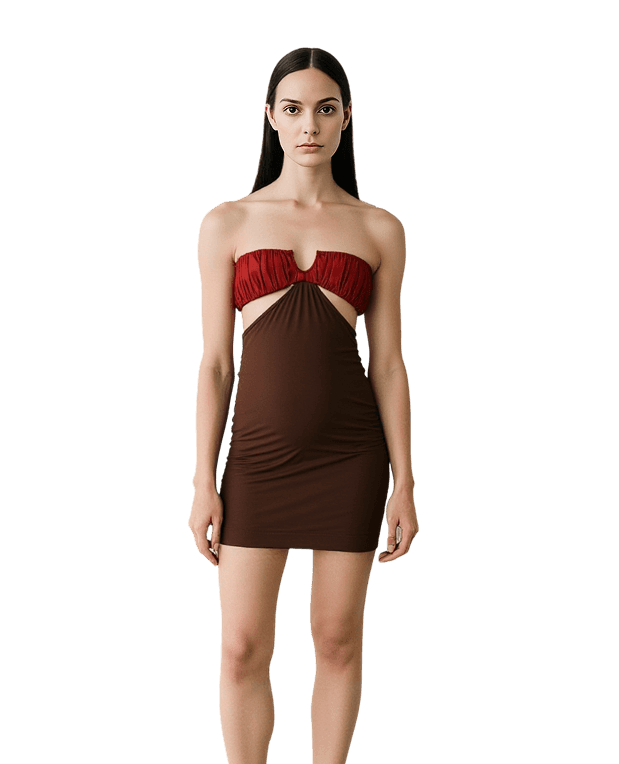
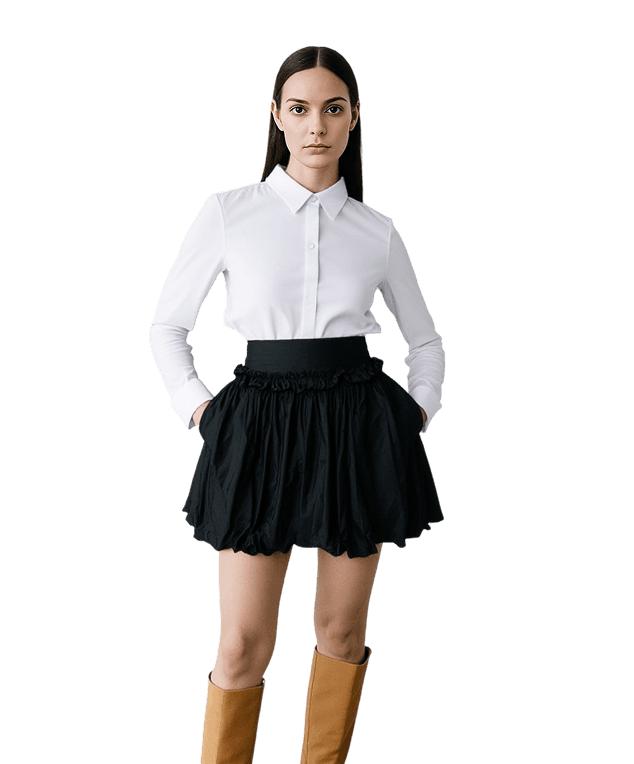
Footwear has quietly become one of the largest virtual try-on categories in fashion ecommerce. On DRESSX Agent, 1 in 4 try-ons is now a shoe, putting footwear alongside apparel as a category shoppers actively want to preview before buying.
That shift makes sense once you consider how little a flat product photo actually tells a shopper about a shoe.
Why Is Footwear Becoming Such a Big Try-On Category?
Footwear is becoming a major try-on category because shoes carry the same fit uncertainty as apparel, with none of the size-chart conventions that make apparel slightly easier to guess. Shoes see a 17% return rate among U.S. online shoppers, according to Statista Consumer Insights data.
Unlike a shirt, a shoe also has to be judged in motion and in proportion to an entire outfit, beyond a body alone. That is a harder problem for a static photo to solve, and shoppers are increasingly reaching for try-on tools to solve it themselves.
What Makes Shoes Specifically Hard to Judge From a Product Photo?
Shoes are hard to judge from a photo because footwear is evaluated on details a flat image rarely captures well: toe shape, sole profile, heel height, ankle coverage, material finish, and how the shoe actually sits on the foot.
A pointed pump, technical sneaker, platform sandal, leather boot, and sculptural heel each require completely different geometry and material logic to render convincingly. What looks correct for a sneaker's sole volume will not translate to a stiletto heel.
Construction details raise the stakes further. Stitching, laces, straps, panels, soles, and hardware are not decorative afterthoughts. They signal quality and design intent, which is exactly what a shopper is paying for at checkout.
How Does This Uncertainty Show Up in Return Data?
Sizing and fit uncertainty is already the single largest driver of fashion returns broadly. U.S. retailers estimated that 16.9% of annual sales were returned in 2024, totaling $890 billion, according to the National Retail Federation and Happy Returns.
Scale and proportion compound the problem specifically for items worn on the body. 42% of online shoppers try to judge a product's size directly from its images, according to usability research firm Baymard Institute, yet 28% of major ecommerce sites fail to provide the kind of image that would actually let them do that accurately.
A shoe that looks one way in a flat catalog photo and another way once it is actually on a foot is exactly the kind of mismatch that turns a purchase into a return.
How DRESSX Renders Shoes With Precision
DRESSX Virtual Try-On for Shoes is built around that exact complexity. The rendering pipeline maintains on-foot placement, left-right orientation, perspective, silhouette, and sole volume across different users and poses.
Material response and fine construction details get the same precision, so a technical sneaker's mesh panelling and a leather boot's stitching both hold up to close inspection rather than looking flattened into a generic overlay.
Deployment follows DRESSX's standard models across its other virtual try-on offerings: API access, a white-label build, or a Shopify app install, so a footwear brand is not forced to rebuild its stack to add it.
What to Look For in Shoe-Specific Virtual Try-On
A few checks can confirm a solution is actually built for the range and complexity footwear requires.
On-foot placement accuracy. Confirm the technology gets left-right orientation and perspective correct, beyond a generic overlay on a foot shape.
Material and construction fidelity. Stitching, laces, straps, and sole material should read correctly up close, across leather, mesh, and technical fabrics alike.
Range across silhouettes. A flat sneaker and a heeled sandal require different rendering logic. Confirm both look equally convincing.
Deployment fit for your catalog. Confirm whether an API, white-label, or app-based rollout matches your platform and timeline.
Frequently Asked Questions
Can shoppers virtually try on shoes with DRESSX? Yes. DRESSX Virtual Try-On renders footwear on a shopper's own photo or AI Twin, capturing on-foot placement, sole volume, and material finish across sneakers, heels, boots, and sandals.
How does Virtual Try-On handle footwear angles and sizing? The rendering pipeline maintains correct left-right orientation and perspective across different poses, while size recommendations are trained on brand-specific measurements to reduce fit guesswork before checkout.
Closing the Gap Between a Photo and a Fitted Shoe
Footwear's rise as a try-on category is not a surprise once you consider what a static photo has always failed to communicate: how a shoe actually looks in motion, in proportion, and on a real foot.
DRESSX Virtual Try-On for Shoes closes that gap with the on-foot accuracy shoppers are already seeking out.
DRESSX has covered the broader return impact of that shift in how virtual try-on helps fashion brands reduce returns.
DRESSX has also published a full breakdown of virtual try-on statistics for brands evaluating the category further.