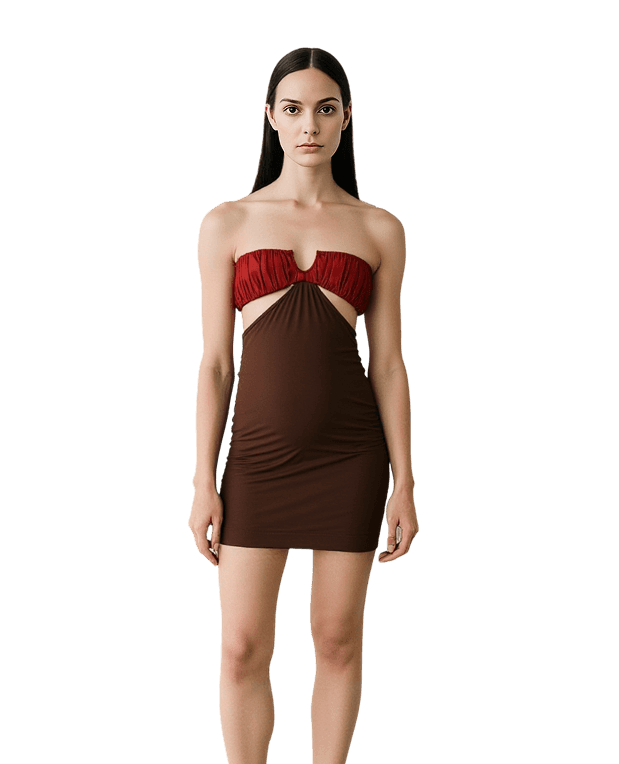
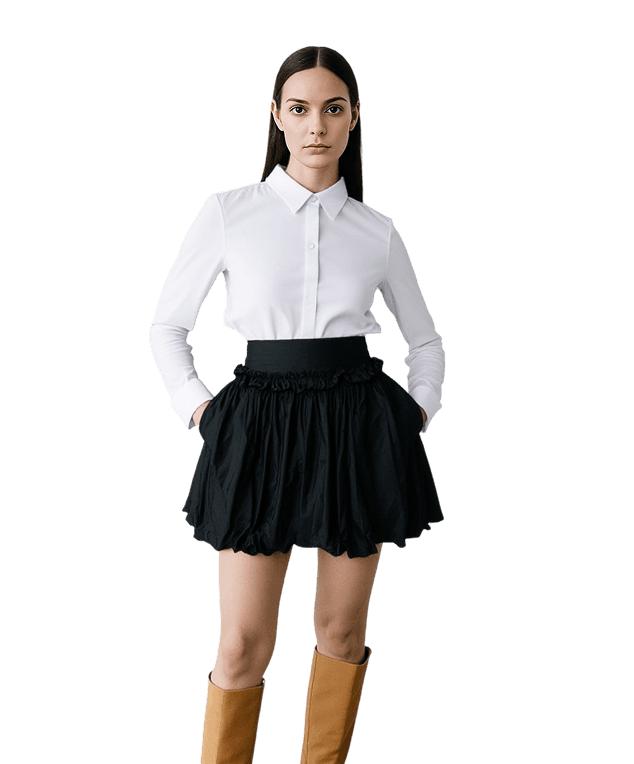
A shopper at 14 weeks and the same shopper at 34 weeks are not the same size, the same shape, or the same fit problem. Most maternity product pages show her one photo and expect it to answer for both.
That gap between a changing body and a static photo is exactly where maternity ecommerce loses its most willing buyers.
Why Is Maternity Sizing So Hard to Get Right?
Maternity sizing is hard because the body it needs to fit keeps changing on a predictable but individual timeline. A full-term pregnancy at a normal starting weight typically adds 25 to 35 pounds, and up to 40 for someone who started underweight, according to the American College of Obstetricians and Gynecologists.
A single size chart cannot represent a body at every point along that range. What fits comfortably at 16 weeks can be too snug by 30, and a shopper has no reliable way to know which version of herself a product photo was even designed for.
This sits on top of a problem that already exists across apparel broadly. 42% of online shoppers try to judge a product's size directly from its images, according to usability research firm Baymard Institute, yet 28% of major ecommerce sites fail to provide the kind of image that would let them do that accurately.
What Makes Maternity and Nursing Wear Harder to Render Than Standard Apparel?
Maternity and nursing wear is harder to render because it is built from construction details designed to move with a changing body, not just cover it. Bump panels, ruched sides, nursing access, empire seams, and stretch fabrics each behave differently depending on the stage of pregnancy.
Stretch jersey, ruched panels, wrap closures, adjustable waistbands, and nursing openings all drape and give in their own way. A rendering system built for standard apparel has no reference point for how a bump panel should stretch at 20 weeks versus 34.
Skin contact adds another layer of difficulty. A garment that skims the body at one stage may need to accommodate significantly more volume just weeks later, and a shopper needs to see that difference before checkout, not after a return.
How Big Is the Cost of Getting This Wrong?
The cost is significant, because maternity is a growing category with the same return exposure as the rest of fashion. The global maternity wear market was valued at $25.6 billion in 2026 and is projected to reach $35.8 billion by 2033, growing at a 4.9% annual rate, according to Grand View Research.
That growth arrives on top of an apparel return problem that is already expensive industrywide. U.S. retailers estimated that 16.9% of annual sales were returned in 2024, totaling $890 billion, according to the National Retail Federation and Happy Returns.
A maternity shopper who cannot tell how a piece will actually sit on her current body is a near-guaranteed addition to that total, buying multiple sizes to sort out at home instead of committing once at checkout.
How DRESSX Renders Maternity and Nursing Wear With Precision
DRESSX Virtual Try-On for Maternity is built around that exact complexity. The rendering pipeline preserves how stretch jersey, ruched panels, wrap closures, and nursing openings behave across body stages, so a shopper at 20 weeks and a shopper at 34 weeks both see a truthful result.
Garment geometry, silhouette, drape, and skin contact hold up across a wide range of body shapes, bump sizes, camera angles, and lighting conditions. A brand can present its full maternity and nursing assortment with the same consistent realism at every stage of the range.
Deployment follows DRESSX's standard models across its other virtual try-on offerings: API access, a white-label build, or a Shopify app install, so a maternity brand is not forced to rebuild its stack to add it.
What to Look For in Maternity-Specific Virtual Try-On
A few checks can confirm a solution is actually built for the range maternity and nursing wear requires.
Stage-accurate rendering. Confirm the technology shows a garment differently across early, mid, and late pregnancy, beyond a single generic body shape.
Construction fidelity. Bump panels, ruched sides, nursing access, and stretch fabrics should behave correctly, not just appear in the render.
Full-outfit and nursing-layer support. Confirm shoppers can preview complete looks, including nursing-specific pieces, not single garments in isolation.
Deployment fit for your catalog. Confirm whether an API, white-label, or app-based rollout matches your platform and timeline.
Frequently Asked Questions
Can DRESSX Virtual Try-On show how maternity clothing fits at different stages of pregnancy? Yes. The rendering pipeline preserves garment behavior across body stages, so a shopper can see how a piece sits at their current stage rather than a single, generic silhouette.
Can shoppers try on full maternity outfits, including nursing layers? Yes. Shoppers can preview complete looks, including nursing-specific pieces like wrap closures and nursing openings, rather than viewing individual garments in isolation.
Closing the Gap Between a Changing Body and a Static Photo
A maternity shopper is not asking a product page to flatter one body. She is asking it to answer honestly for a body that will look different in a matter of weeks.
DRESSX Virtual Try-On for Maternity closes that gap with the stage-accurate rendering a changing body actually needs.
DRESSX has covered the broader return impact of that shift in how virtual try-on helps fashion brands reduce returns.
DRESSX has also published a full breakdown of virtual try-on statistics for brands evaluating the category further.