A shopper buys a dress for a wedding next month. She wears it once, tags carefully tucked in, and returns it the following week. This is not a rare edge case. It is a named, tracked pattern in retail, and dresses sit at the center of it.
What Is Wardrobing, and Why Does It Concentrate in Dresses?
Wardrobing is when a shopper buys an item, wears it once for a specific purpose, and returns it for a full refund. Forty percent of shoppers aged 18 to 29 admit to doing it, according to returns management company Optoro.
The behavior is especially tied to single-use occasions. In a November 2023 Optoro survey, 30% of shoppers admitted to buying an item specifically for an event, then returning it once the occasion had passed. Weddings and formal parties are exactly the moments that drive dress purchases in the first place.
Retailers are responding directly. "Some retailers are addressing the issue by reducing the amount of time consumers have to return items, by eliminating free returns, or by requiring consumers to return items in-store where an employee can examine the item," said Scot Case, executive director of the Center for Retail Sustainability at the National Retail Federation.
That response treats the symptom. The purchase decision itself is where the uncertainty actually starts.
Why Is the Dress Category So Hard to Render Accurately Online?
The dress category is hard to render accurately because it spans more silhouettes, fabrics, and construction techniques than almost any other category in fashion. A fluid silk slip dress behaves nothing like a structured taffeta midi, a bias-cut jersey maxi, or a heavily embellished cocktail dress.
Each of those requires its own rendering logic: how the fabric drapes, how it catches light, how it moves, and how it sits against the body. A flat product photo compresses all of that into a single static image, leaving a shopper to guess at how the dress will actually behave on her.
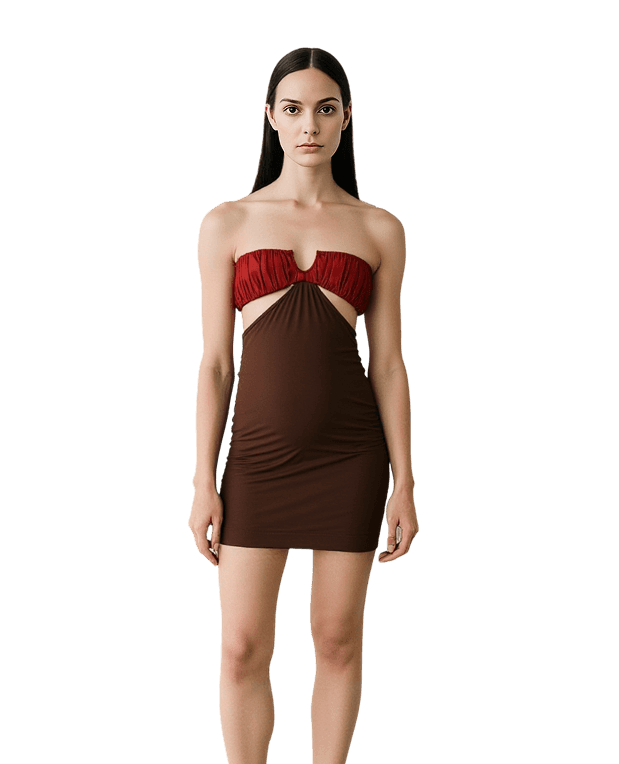
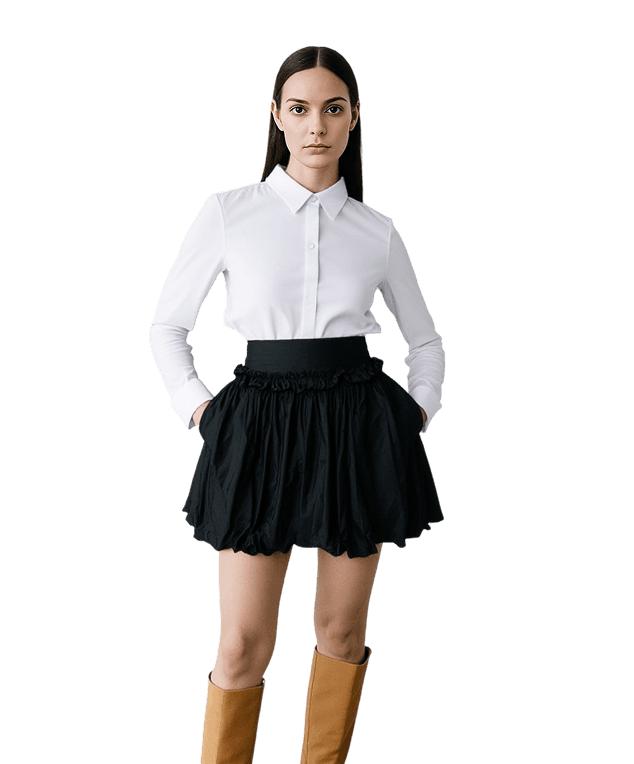
Construction details raise the stakes further. Boning, lining, smocking, ruffles, tiered skirts, puff sleeves, and cut-outs are not decorative afterthoughts. They define a garment's shape and identity, and a customer needs to see them rendered accurately to understand what she is actually buying.
How Does Rendering Uncertainty Feed the Wardrobing Cycle?
Uncertainty about fit and appearance pushes shoppers toward the exact behavior retailers are trying to reduce. A shopper who cannot tell how a dress will actually look for her event is more likely to order it as a safety net, plan to return it if it disappoints, or buy a backup option she never intended to keep.
That dynamic turns a single uncertain purchase into a wardrobing risk before the order even ships. Resolving what the dress will actually look like, before checkout, is what interrupts that pattern.
How DRESSX Renders the Full Complexity of the Dress Category
DRESSX Virtual Try-On for Dresses is built around that exact range, from simple day dresses to heavily constructed occasion wear. The models are trained to capture drape, volume, texture, and surface detail across fabric types and silhouettes, so a collection is presented with the accuracy that converts browsing into a purchase a shopper actually keeps.
Construction detail gets the same treatment. Boning, lining, smocking, ruffles, tiered skirts, puff sleeves, and cut-outs are represented with the precision needed for a shopper to understand the garment before she buys it, not after it arrives.
DRESSX already runs this at the occasion-wear level in practice. Its work with Windsor Fashion focuses specifically on prom and wedding dressing, a category where the emotional stakes and the wardrobing risk are both highest.
Deployment follows the same models available across DRESSX's other virtual try-on offerings: API access, a white-label build, or a Shopify app install, so a dress-focused brand is not forced to rebuild its stack to add it.
What to Look For in Dress-Specific Virtual Try-On
A few checks can confirm a solution actually handles the range dresses require.
Silhouette and drape range. Confirm the technology renders fluid fabrics and structured constructions with equal accuracy, beyond one or the other.
Construction detail fidelity. Boning, smocking, tiered skirts, and cut-outs should be visibly correct, since these details define what a shopper is actually buying.
Occasion-wear handling. Embellishment, volume, and formal silhouettes need the same precision as an everyday day dress.
Deployment fit for your catalog. Confirm whether an API, white-label, or app-based rollout matches your platform and timeline.
Closing the Gap Between One Purchase and One Wear
Wardrobing is not a shopper problem. It is a confidence problem that shows up most in categories like dresses, where a flat photo cannot answer the one question that actually matters: how will this look at the event it was bought for.
DRESSX Virtual Try-On for Dresses answers that question before checkout, giving shoppers a purchase they are more likely to keep, and DRESSX has covered the return impact of that shift in more detail in how virtual try-on helps fashion brands reduce returns.