Most fashion ecommerce leaders who want to add virtual try-on run into the same question before they can move forward: how hard will this be to deploy, and will it work with what we already have.
That question, not the AI itself, is usually what stalls the decision.
What's Really Slowing AI Adoption in Fashion Ecommerce?
Retailers do not struggle to find AI tools that work in a demo. They struggle to make new tools work inside systems that were not built for them.
NRF's research from its 2026 Nexus event makes this explicit: pilot programs often succeed in controlled environments, but extending those capabilities across regions, channels, and teams introduces friction, since data is not always structured the same way across systems.
NRF's conclusion is direct: adoption depends on whether a new system makes work easier, not more complex. For a fashion brand evaluating virtual try-on, that means the deployment model matters as much as the technology itself.
How Does Virtual Try-On Typically Integrate With an Ecommerce Platform?
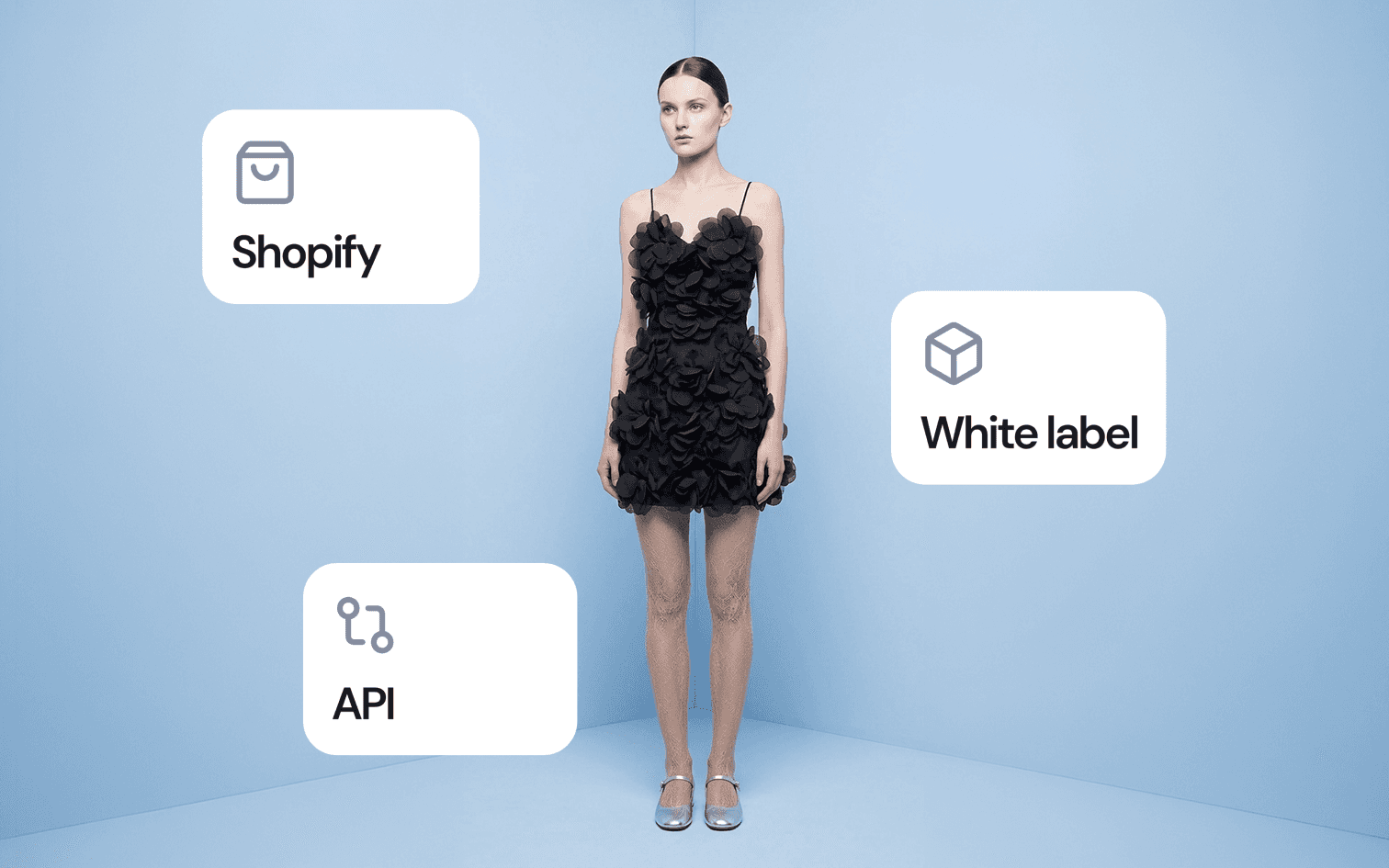
Virtual try-on tools generally deploy through one of three models: a marketplace app install, an API integration, or a white-label deployment inside an existing interface.
An app install is the fastest path, built for platforms like Shopify where a brand can add try-on through an existing app store without custom development. An API integration gives a technical team more control, letting try-on functionality plug into a custom-built storefront or a non-Shopify platform.
A white-label deployment embeds the technology fully inside a brand's own interface, with no visible third-party branding.
Which model fits depends on a brand's existing stack, its engineering resources, and how much customization the brand's product catalog requires.
How DRESSX Virtual Try-On Deploys Across Your Stack
DRESSX Virtual Try-On supports all three deployment models, so brands are not forced to rebuild their stack to add it.
For Shopify stores, brands can install the DRESSX Virtual Try-On app directly from the Shopify App Store, upload their product catalog, and go live without custom development. DRESSX reports an integration time as fast as two minutes for this path.
For brands on other platforms, or those that need deeper customization, DRESSX offers API access and white-label deployment, letting virtual try-on plug into a custom storefront or run fully embedded under a brand's own interface.
According to DRESSX, this enterprise path includes custom integrations and API-based workflows, backed by dedicated onboarding and technical support rather than a self-serve setup alone.
Both paths connect to the same underlying technology. DRESSX reports a 40% reduction in return rates and a 3.2x lift in conversion across brands using virtual try-on, regardless of which deployment model they choose.
Virtual Try-On is also one piece of a larger system. It sits inside the broader DRESSX AI Suite, so the same API and white-label infrastructure can extend to content production and clienteling as a brand's needs grow.
How Long Does It Actually Take to Deploy Virtual Try-On?
Deployment timelines vary by model, not by the strength of the underlying technology. A Shopify app install can go live the same day a brand uploads its catalog. A custom API or white-label deployment takes longer, since it involves mapping the technology to an existing storefront and a brand's specific catalog structure.
That difference is why DRESSX Virtual Try-On for Shopify is built around enterprise-grade infrastructure and dedicated onboarding for brands that need custom workflows, rather than a one-size-fits-all setup.
Brands running large or complex catalogs typically need that dedicated support to move from pilot to full-catalog deployment without the friction NRF describes.
Questions to Ask Before You Deploy B2B Virtual Try-On
A short evaluation checklist can save weeks of back and forth with an engineering team later.
What deployment models does the vendor support? Confirm whether an app install, API, or white-label option fits your current platform.
How does the vendor handle catalog scale? Ask how the technology performs across a full seasonal collection, beyond a pilot set of SKUs.
What does onboarding actually include? Look for dedicated technical support, beyond documentation, especially for a custom or white-label build.
How is customer and product data handled? Confirm where data lives and how it moves between the try-on platform and your existing systems.
What is the realistic timeline? Ask for a range based on your specific platform and catalog size, not a single headline number.
Choose the Integration Path Behind the Technology
The AI behind virtual try-on has matured. What still separates a smooth rollout from a stalled one is the deployment model behind it.
DRESSX Virtual Try-On is built to meet fashion brands where their stack already is, whether that means a same-day Shopify install or a custom enterprise deployment with dedicated support.